
 Mohit Singh
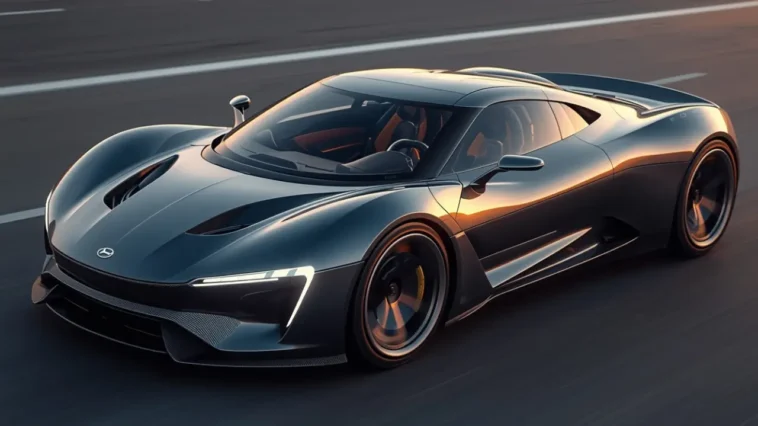
The hybrid supercar is no longer a compromise it is now the fastest production car format on the planet for the specific experience that matters most to drivers: the feeling of acceleration. Pure EVs produce extraordinary paper figures, but engineers and experienced drivers increasingly report that the hybrid’s combination of instant electric torque layered on top of a screaming combustion engine creates a more intense and sustained feeling of speed than an EV’s smooth, linear push. Sources in the performance engineering community say this distinction matters enormously in real-world driving where the sensation of continuous acceleration build-up, mechanical sound, and layered power delivery shapes perceived speed far more than a 0–60 number on a spec sheet.
What Makes Hybrid Feel Faster
The technical explanation for why a hybrid supercar can feel faster than a pure EV even when their acceleration figures are comparable comes down to how power arrives at the wheels across the full speed range:
- Instant electric torque — electric motors deliver maximum torque from zero RPM, eliminating the hesitation that even the best turbocharged combustion engines carry
- Zero turbo lag — electric assist fills the power gap while a turbocharger builds boost, producing a continuous surge that feels seamless rather than stepped
- Rising combustion power on top — as the electric motor delivers its initial hit, the combustion engine continues building toward its power peak, creating a double-layer acceleration sensation that feels like the car is constantly accelerating harder
- Sound and mechanical feedback — the combustion engine’s rising note gives the driver an auditory confirmation of acceleration that silent EV motors cannot produce, amplifying the felt intensity of the experience
- Regenerative braking energy — hybrid systems recover braking energy and redeploy it on the next acceleration phase, meaning the car feels more responsive every time the driver gets back on the throttle
Hybrid Supercar: The Numbers That Back It Up
The performance data from the current generation of production hybrid supercars confirms that the “felt faster” argument has hard numbers behind it:
- Lamborghini Temerario (2025–26): Twin-turbocharged V8 plus three electric motors, 907 horsepower, 0–62 mph in 2.7 seconds, rev ceiling of 10,000 RPM — the highest of any production V8
- Ferrari SF90 Stradale: 3.9-litre twin-turbo V8 plus three electric motors, 986 combined horsepower — making it the most powerful road car Ferrari has ever produced
- Ferrari 296 GTB: 3.0-litre twin-turbo V6 plus electric motor, 818 horsepower, 0–62 mph in 2.9 seconds
- McLaren Artura: 3.0-litre twin-turbo V6 plus 70kW electric motor, 690 horsepower, 0–62 mph in 3.0 seconds — won Auto Express Performance Car of the Year at the 2025 New Car Awards
- Chevrolet Corvette E-Ray (2025–26): 6.2-litre V8 plus front-axle electric motor, 655 horsepower, 0–60 mph in 2.5 seconds
- BMW M5 (2025): Twin-turbo 4.4-litre V8 plus electric motor PHEV system, 750 horsepower, 0–60 mph in 2.9 seconds
- Aston Martin Valhalla: Formula 1-derived hybrid powertrain, over 1,000 horsepower, up to 9.2 miles of electric-only range, priced around $1 million
- Bugatti Tourbillon: Bespoke V16 engine plus three electric motors, 1,775 combined horsepower — the most powerful hybrid production car announced to date
Why Pure EVs Fall Short on Feel
Pure electric supercars produce extraordinary torque figures the Rimac Nevera, for example, delivers a verified 0–60 mph time of 1.81 seconds but veteran performance drivers and automotive journalists consistently report that the driving experience lacks the multi-sensory intensity that hybrid systems produce. Sources in the automotive engineering community say the single biggest factor is sound: a silent EV’s acceleration feels disconnected from the driver’s inputs in a way that a combustion-electric hybrid’s rising engine note never does, because the ear provides continuous speed feedback that the brain uses to amplify perceived excitement. Insiders in the supercar buyer community note that customers spending between £500,000 and £3 million on a performance car are not buying 0–60 numbers they are buying an experience, and that experience is currently more fully delivered by hybrid systems than by any pure EV.
Every Major Supercar Brand Has Gone Hybrid
The shift to hybrid powertrains in the supercar segment has accelerated dramatically between 2023 and 2026, with every major manufacturer now offering hybrid models at the top of their range:
- Lamborghini — the brand’s entire current lineup is now hybrid-only, including the Revuelto (V12 hybrid), Temerario (V8 twin-turbo hybrid), and Urus SE (PHEV SUV)
- Ferrari — the SF90 Stradale and 296 GTB both use hybrid systems; Ferrari has publicly stated that hybrids form the core of its performance strategy through the next decade
- McLaren — the Artura replaced the 570S with a hybrid powertrain and continues expanding the range
- Porsche — the Porsche 918 Spyder established the hybrid hypercar template, and Porsche continues integrating hybrid systems across the 911 and Panamera ranges
- Aston Martin — the Valhalla brings Formula 1 hybrid technology to road use for the first time in a production Aston
The EV Range Problem
Pure EV supercars face a specific performance endurance problem that hybrid systems do not: battery depletion. A pure EV hypercar delivers its maximum performance only when the battery is at or near full charge repeated hard acceleration runs or extended track sessions deplete the battery and reduce available power, meaning the car that delivered a 1.81-second 0–60 on a full charge may struggle to repeat that figure on lap 10 of a track day. Hybrid systems, by contrast, continuously regenerate energy through braking and combustion engine charging, meaning performance stays consistent across longer driving sessions without requiring a charging stop.
The Charging Reality
Sources in the supercar ownership community note a practical dimension that rarely features in spec comparisons: supercar owners already connect their vehicles to battery tenders and trickle chargers when stored in garages, making a PHEV hybrid’s charging requirement essentially no different from their existing ownership behaviour. The same garage power connection that maintains a car’s 12-volt systems also handles a PHEV’s battery top-up overnight meaning the charging inconvenience that makes PHEVs problematic for mass-market daily drivers is largely irrelevant in the supercar ownership context. Insiders in the performance car retail sector say this specific insight that supercar buyers already plug their cars in nightly as a maintenance habit has accelerated manufacturer confidence in PHEV supercar formats.
The Weight Counterargument
The most consistent criticism of hybrid supercar systems is weight lithium-ion battery packs add significant mass that pure combustion supercars do not carry, and pure EVs manage their weight penalty through lower centres of gravity rather than eliminating it. Engineers have responded to this through three specific design approaches: placing battery packs as low and centrally as possible to minimise the effect on handling dynamics, using carbon fibre and lightweight alloy construction to offset battery weight elsewhere in the chassis, and designing smaller, task-specific battery packs that deliver performance-focused energy rather than commuter-range capacity. Sources in hypercar development circles say the weight argument, while legitimate in absolute terms, no longer translates into a handling disadvantage in the latest-generation hybrid supercars with the Lamborghini Temerario and Ferrari SF90 both receiving near-universal praise for cornering precision despite carrying hybrid systems.
What Comes Next
The 2026 supercar calendar confirms that the hybrid format has reached a point of no return in the performance car segment, with the Bugatti Tourbillon’s V16-plus-three-electric-motors configuration representing the apex of current hybrid hypercar ambition at 1,775 horsepower. Hyundai’s N Vision 74 a hydrogen fuel cell hybrid introduces a third power source into the performance car conversation, generating approximately 500 kW and 900 Nm of torque in a format that eliminates battery weight entirely. Reports suggest the next five years will see pure combustion supercars effectively disappear from new model launches as every manufacturer either commits to hybrid systems or in a small number of cases goes fully electric at the very top of their range.
A pure EV can beat a hybrid to 60 mph on paper — but the hybrid gives you the sound, the sensation, the rising power delivery, and the consistent performance that makes a driver want to do it again and again.
Do you think hybrid supercars genuinely offer a better driving experience than pure EVs, or are we just holding on to combustion nostalgia and calling it performance? Tell us in the comments.