
 Mohit Singh
|
Getting your Trinity Audio player ready...
|
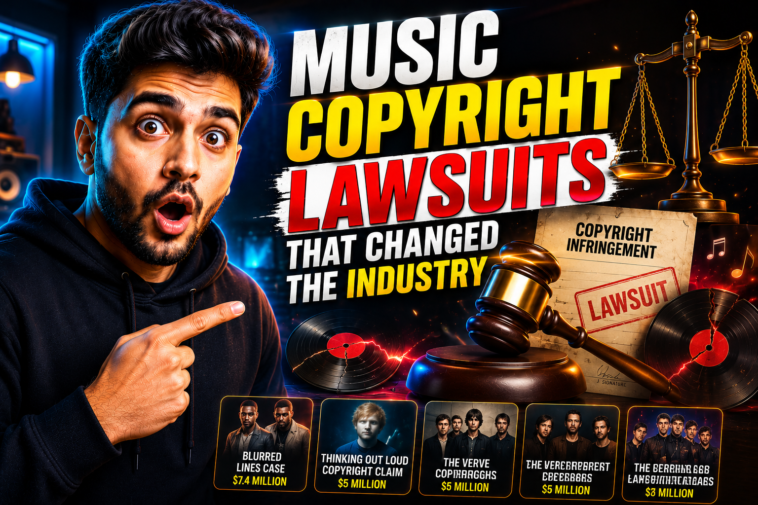
A single court decision can rewrite the rules for an entire industry. Music copyright lawsuits have done exactly that. They’ve changed how songs are written, how credits are given, and how much money changes hands.
The “Blurred Lines” Verdict (2015)
This case changed what “copying” means in music. Marvin Gaye’s estate sued Robin Thicke and Pharrell Williams. They claimed “Blurred Lines” copied Gaye’s 1977 hit “Got to Give It Up.”
A jury agreed. They ordered Thicke and Williams to pay $7.3 million in damages. The Gaye estate also got half of the song’s future royalties. “Blurred Lines” had generated nearly $16.5 million in profits up to that point.
The lawyers for Thicke and Williams called it a “horrible precedent for music and creativity.” They were right. The verdict opened the door to a flood of similar lawsuits. Now anyone with a hit song faces the risk of a “feel” or “sound” claim.
The ruling focused on the song’s “constellation” of similarities: bass lines, keyboard parts, and harmonic structures. You don’t need to copy note-for-note anymore. Copying the overall vibe can be enough.
The “Stairway to Heaven” Battle (2014-2020)
Led Zeppelin faced a similar claim over their 1971 classic. The estate of Randy Wolfe (guitarist for the band Spirit) sued. They said the opening riff of “Stairway to Heaven” came from Spirit’s 1967 song “Taurus.”
The case went to trial in 2016. Led Zeppelin won. The jury heard from music experts who said the descending musical pattern is a common device used for centuries. One example cited was “Chim Chim Cher-ee” from Mary Poppins.
The estate appealed. An appeals court upheld the original verdict in 2020. The U.S. Supreme Court declined to hear the case.
The outcome was different from “Blurred Lines.” But the case still sent a warning. The estate’s lawyer argued Led Zeppelin “won on a technicality.” The jury never heard the actual album recording of “Taurus.” They only heard a sheet music version.
Millions of dollars were at stake. “Stairway to Heaven” earned an estimated $3.4 million in the five-year period covered by the trial. The song’s total earnings are estimated at over $500 million.
George Harrison’s “My Sweet Lord” (1976)
This is the original “subconscious copying” case. George Harrison wrote “My Sweet Lord” in 1970. It became his first solo hit. But it sounded a lot like The Chiffons’ 1963 song “He’s So Fine.”
Bright Tunes Music sued Harrison. The judge ruled that Harrison had not deliberately copied the song. But he had done it “subconsciously.”
The case dragged on for 18 years. Harrison’s own business manager bought the rights to “He’s So Fine” mid-case and then sued Harrison himself. Harrison eventually paid his ex-manager $587,000 to settle.
The ruling established that you can infringe copyright even if you don’t mean to. Intent doesn’t matter. If the songs are similar enough, you’re liable.
Vanilla Ice vs. Queen and David Bowie (1990)
Vanilla Ice’s “Ice Ice Baby” used the exact same bassline as Queen and David Bowie’s “Under Pressure.” Ice added one extra note and claimed that made it different.
That argument didn’t work. The case settled privately. Ice paid $4 million and gave Bowie and Queen songwriting credits.
This case set a precedent for sampling. Hip-hop was booming, and sampling was everywhere. Artists like Biz Markie and De La Soul were getting sued for unauthorized samples. The Vanilla Ice case showed that even one extra note won’t save you. You need permission.
The Verve vs. The Rolling Stones (1997)
The Verve’s “Bitter Sweet Symphony” is built on a sample of an orchestral version of The Rolling Stones’ “The Last Time.” The Verve had a license to use a five-note segment.
But the Stones’ manager claimed The Verve used more than they were allowed. The case settled out of court. The Verve forfeited all royalties and had to share songwriting credits with Mick Jagger and Keith Richards.
For 22 years, The Verve didn’t make a penny from their biggest hit. In 2019, Jagger and Richards voluntarily gave the songwriting credits back. But the damage was done. The case scared artists away from sampling.
2 Live Crew vs. Roy Orbison (1994)
This case went to the Supreme Court. 2 Live Crew made a parody of Roy Orbison’s “Oh, Pretty Woman.” Acuff-Rose Music sued for copyright infringement.
The Supreme Court ruled that 2 Live Crew’s parody was a “fair use.” Parody is transformative. It comments on the original work. That qualifies as fair use.
This case defined what counts as fair use in music. Commercial parodies are protected. The decision gave artists more freedom to create transformative works.
What These Cases Mean for You
These lawsuits changed the industry in five ways:
- You can copy a “feel.” “Blurred Lines” showed that a song’s overall vibe can be protected. You don’t need identical notes.
- Intent doesn’t matter. Harrison proved that. Subconscious copying is still copying.
- Sampling requires permission. The Vanilla Ice and Verve cases made that clear.
- Parody is protected. 2 Live Crew’s Supreme Court win protects transformative works.
- The financial stakes are huge. Millions in damages. Future royalties. Songwriting credits. These cases can ruin careers.
The music industry has never been the same. Songwriters are more careful. Labels are more aggressive. Lawyers are busier. And every new hit song carries the risk of a lawsuit.
The next big case is already brewing. AI-generated music is raising new questions about copyright. Who owns a song written by an algorithm? These landmark cases will serve as the foundation for the battles to come.
A single court decision can rewrite the rules for an entire industry. Music copyright lawsuits have done exactly that. They’ve changed how songs are written, how credits are given, and how much money changes hands.
The “Blurred Lines” Verdict (2015)
This case changed what “copying” means in music. Marvin Gaye’s estate sued Robin Thicke and Pharrell Williams. They claimed “Blurred Lines” copied Gaye’s 1977 hit “Got to Give It Up.”
A jury agreed. They ordered Thicke and Williams to pay $7.3 million in damages. The Gaye estate also got half of the song’s future royalties. “Blurred Lines” had generated nearly $16.5 million in profits up to that point.
The lawyers for Thicke and Williams called it a “horrible precedent for music and creativity.” They were right. The verdict opened the door to a flood of similar lawsuits. Now anyone with a hit song faces the risk of a “feel” or “sound” claim.
The ruling focused on the song’s “constellation” of similarities: bass lines, keyboard parts, and harmonic structures. You don’t need to copy note-for-note anymore. Copying the overall vibe can be enough.
The “Stairway to Heaven” Battle (2014-2020)
Led Zeppelin faced a similar claim over their 1971 classic. The estate of Randy Wolfe (guitarist for the band Spirit) sued. They said the opening riff of “Stairway to Heaven” came from Spirit’s 1967 song “Taurus.”
The case went to trial in 2016. Led Zeppelin won. The jury heard from music experts who said the descending musical pattern is a common device used for centuries. One example cited was “Chim Chim Cher-ee” from Mary Poppins.
The estate appealed. An appeals court upheld the original verdict in 2020. The U.S. Supreme Court declined to hear the case.
The outcome was different from “Blurred Lines.” But the case still sent a warning. The estate’s lawyer argued Led Zeppelin “won on a technicality.” The jury never heard the actual album recording of “Taurus.” They only heard a sheet music version.
Millions of dollars were at stake. “Stairway to Heaven” earned an estimated $3.4 million in the five-year period covered by the trial. The song’s total earnings are estimated at over $500 million.
George Harrison’s “My Sweet Lord” (1976)
This is the original “subconscious copying” case. George Harrison wrote “My Sweet Lord” in 1970. It became his first solo hit. But it sounded a lot like The Chiffons’ 1963 song “He’s So Fine.”
Bright Tunes Music sued Harrison. The judge ruled that Harrison had not deliberately copied the song. But he had done it “subconsciously.”
The case dragged on for 18 years. Harrison’s own business manager bought the rights to “He’s So Fine” mid-case and then sued Harrison himself. Harrison eventually paid his ex-manager $587,000 to settle.
The ruling established that you can infringe copyright even if you don’t mean to. Intent doesn’t matter. If the songs are similar enough, you’re liable.
Vanilla Ice vs. Queen and David Bowie (1990)
Vanilla Ice’s “Ice Ice Baby” used the exact same bassline as Queen and David Bowie’s “Under Pressure.” Ice added one extra note and claimed that made it different.
That argument didn’t work. The case settled privately. Ice paid $4 million and gave Bowie and Queen songwriting credits.
This case set a precedent for sampling. Hip-hop was booming, and sampling was everywhere. Artists like Biz Markie and De La Soul were getting sued for unauthorized samples. The Vanilla Ice case showed that even one extra note won’t save you. You need permission.
The Verve vs. The Rolling Stones (1997)
The Verve’s “Bitter Sweet Symphony” is built on a sample of an orchestral version of The Rolling Stones’ “The Last Time.” The Verve had a license to use a five-note segment.
But the Stones’ manager claimed The Verve used more than they were allowed. The case settled out of court. The Verve forfeited all royalties and had to share songwriting credits with Mick Jagger and Keith Richards.
For 22 years, The Verve didn’t make a penny from their biggest hit. In 2019, Jagger and Richards voluntarily gave the songwriting credits back. But the damage was done. The case scared artists away from sampling.
2 Live Crew vs. Roy Orbison (1994)
This case went to the Supreme Court. 2 Live Crew made a parody of Roy Orbison’s “Oh, Pretty Woman.” Acuff-Rose Music sued for copyright infringement.
The Supreme Court ruled that 2 Live Crew’s parody was a “fair use.” Parody is transformative. It comments on the original work. That qualifies as fair use.
This case defined what counts as fair use in music. Commercial parodies are protected. The decision gave artists more freedom to create transformative works.
What These Cases Mean for You
These lawsuits changed the industry in five ways:
- You can copy a “feel.” “Blurred Lines” showed that a song’s overall vibe can be protected. You don’t need identical notes.
- Intent doesn’t matter. Harrison proved that. Subconscious copying is still copying.
- Sampling requires permission. The Vanilla Ice and Verve cases made that clear.
- Parody is protected. 2 Live Crew’s Supreme Court win protects transformative works.
- The financial stakes are huge. Millions in damages. Future royalties. Songwriting credits. These cases can ruin careers.
The music industry has never been the same. Songwriters are more careful. Labels are more aggressive. Lawyers are busier. And every new hit song carries the risk of a lawsuit.
The next big case is already brewing. AI-generated music is raising new questions about copyright. Who owns a song written by an algorithm? These landmark cases will serve as the foundation for the battles to come.